IRS Says Breastfeeding Expenses Are Tax Write-Offs. Finally
Everyone markets it as cheap and easy. As in, "You can whip it out at any time." And, "It doesn't cost anything." And, "There's nothing to warm up."To a degree, that's true. Traveling and doing it is liberating. And the middle of the night? You can do it in bed; you can do it while you watch TV. But "cheap" isn't really a good descriptor for something so time-consuming and ultimately, especially, but not only, for women who work or want to step away from their child, so many accoutrements. And cheap isn't a good way to applaud something that provides so many benefits down the road. Cheap connotes easy. Cheap connotes worthless. And maybe that's the problem.I'm talking about breastfeeding, of course. Breastfeeding itself – which, if you count the countless hours breastfeeding women put in, is – while indubitably nutritious as well as wonderful -- far from free. And forget "free" when it comes to pumping. The state-of-the-art Medela backpack pump rings up at $264.99 (the "pump-in-style" hand bag can set you back $360). And that's before you extra valves ($7), bags for freezing ($10 for 50), extra tubing ($6), the "hands free" bodice that lets you pump and use a computer ($32). Some estimates put the yearly cost between $500 to $1,000.
The American Academy of Pediatrics has spent years trying to roll back the push of formula, trumpeting the benefits of breastfeeding exclusively for the first six months of life (the World Health Organization promotes breastfeeding for two years). Breastfeeding gives kids good antibodies, immunities, is said to potentially guard against asthma, allergies, diabetes and obesity -- keeping kids well, long after they give up the nipple. A Harvard Medical School study published last spring in the journal Pediatrics estimated that if 90 percent of American women breastfed, 900 premature infant deaths would be prevented and patients and hospitals would see savings of $13 billion in lost wages and saved health care costs – so you might assume that doing so would be a tax write-off.Until recently, you would have been wrong. As of this fall, the IRS position was that breastfeeding didn't have enough medical benefits to qualify as tax exempt.Last week, the Internal Revenue Service finally agreed to allow 2010 taxes to reflect the costs of pumps and milk bags, as all the myriad ways in which to maintain breastfeeding while working or on the road can make "free" suddenly cost quite a bit of cash. That means women with flexible spending accounts can use their pre-tax dollars to pay for nursing supplies. Those who itemize can add them in to their health care costs.Rep. Carolyn Maloney, D-N.Y., hailed the change in a statement. "This is good news for nursing moms, and a welcome recognition of scientific fact by the IRS: breastfeeding has significant health benefits -- it helps prevent disease, and is good for moms and for babies," Maloney said. "Anything we can do to encourage healthy choices is a good thing -- and this ruling definitely qualifies!"But the IRS is not alone in trying not to think about breastfeeding for as long as possible. Last week Noriko Aita, a Rockville, Md. mom visiting the Hirshhorn Museum, was asked to feed her baby in a bathroom stall. She left, went home and Googled that federal law allows breastfeeding on federal property – anywhere and at anytime.In response, a nurse-in was organized, and dozens of moms descended on the Smithsonian to breastfeed in public. "We're not protesting against [the museum]," one organizer told the Washington Post. "The nurse-in wasn't organized to elicit an apology. What happened to Nori happened because there was a lack of education and awareness. We want to ensure it doesn't happen to anybody else again."As Dr. Melissa Bartick, one of the lead doctors of the Harvard breastfeeding benefits study pointed out to a USA Today reporter, the problem is seeing breastfeeding as a "lifestyle" choice rather than a "public health" benefit. Winning over the IRS is a triumph, to be sure, but one that's come years later than it should have.
Read the full article: http://www.politicsdaily.com/2011/02/14/irs-says-breastfeeding-expenses-are-tax-write-offs-finally/
About Me

- Nizo Wear
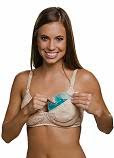
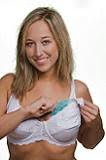
- Admit it. Most nursing bras are kind of industrial-looking. At least that is what I thought when I was shopping around for a nursing bra. I also found that while breastfeeding is natural and wonderful, it is also difficult and complex and sometimes it really hurts! The best advice I could find was to use warm compresses before nursing and cold compresses afterwards. But nobody could give me any tips for how to make the whole compress thing practical or COMFORTABLE! So, my design was patented and Nizo Wear was born. I firgured while I was at it I should make them pretty as well. Nizo Wear makes nursing bras that are de both functional and pretty. Lace and rhinestones, playful prints, shapely lines, all designed to help you feel stylish and good again.
Wednesday, February 23, 2011

Michelle Obama works to remove barriers to breastfeeding
First lady Michelle Obama will be speaking out to remove barriers to breastfeeding, Politics Daily has learned, throwing the spotlight on nursing as a way to reduce childhood obesity.
This comes as the Obama administration in the past year has made several moves to encourage breastfeeding -- including a push for more flexible workplace rules and an Internal Revenue Service ruling on Thursday that breast pumps and other nursing supplies qualify for tax breaks. Mrs. Obama -- who has spoken in public about nursing her youngest daughter, Sasha -- is going to tread carefully in what might be a sensitive area for some women.
"Breastfeeding is a very personal choice for every woman," Kristina Schake, Mrs. Obama's communications chief, told Politics Daily. "We are trying to make it easier for those who choose to do it."
Looking ahead to what she will do in the second year of "Let's Move," Mrs. Obama said: "We also want to focus on the important touch points in a child's life. And what we're learning now is that early intervention is key. Breastfeeding. Kids who are breastfed longer have a lower tendency to be obese."
"Breastfeeding rates are low among African-American mothers compared to other racial and ethnic groups, according to the Centers for Disease Control and Prevention, and Mrs. Obama took note of this when she addressed the Congressional Black Caucus Conference on Sept. 10."And because it's important to prevent obesity early, we're also working to promote breastfeeding, especially in the black community -- where 40 percent of our babies never get breastfed at all, even in the first weeks of life, and we know that babies that are breastfed are less likely to be obese as children," she said.
Robin Schepper, executive director of "Let's Move," told Politics Daily, Mrs. Obama wants to increase breastfeeding rates but "is not telling women to breastfeed ... but wants to make it easier for moms by encouraging hospitals to change practices so after a baby is born, the baby is in the room with them."Toward that goal, Mrs. Obama is going to push more hospitals to be certified as "Baby Friendly" by Baby Friendly USA, a non-governmental organization that works with the United Nations Children's Fund, or UNICEF, to increase breastfeeding opportunities. Only 3 percent of births occur at U.S. hospitals with the "Baby Friendly" designation.
"In a "Let's Move" policy report issued last May, one of the problems mothers may have with breastfeeding starts in the hospital where after birth, "many babies are unnecessarily given formula and separated from their mothers, making it harder to start and practice breastfeeding."
Meanwhile, the Internal Revenue Service announced Thursday that the costs for "breast pumps and supplies that assist lactation are medical care" are now, under the IRS code eligible for tax breaks. That means that breastfeeding supplies could be treated as deductible medical expenses and/or be reimbursed under flexible spending plans.
In the child nutrition bill President Obama signed Dec. 13, the WIC program for low-income women -- the nickname for the Special Supplemental Nutrition Program for Women, Infants, and Children -- provides more breastfeeding counseling and supplies to eligible mothers.
The Affordable Care Act signed by Obama on March 13 -- the health care overhaul Republicans are trying to repeal -- requires certain employers to give nursing mothers break time and a place -- not a bathroom -- to express milk.
Workplace rules have a major impact on a woman's decision whether to nurse."While 75 percent of women initially breastfeed their baby, after six months only 43 percent are still breastfeeding at all," Jarrett wrote. "One of the most common reasons mothers cite for discontinuing breastfeeding is returning to work and not having break time or a private space to express milk.
Check out the full article: http://www.politicsdaily.com/2011/02/14/michelle-obama-to-promote-breast-feeding-as-irs-gives-tax-breaks/
This comes as the Obama administration in the past year has made several moves to encourage breastfeeding -- including a push for more flexible workplace rules and an Internal Revenue Service ruling on Thursday that breast pumps and other nursing supplies qualify for tax breaks. Mrs. Obama -- who has spoken in public about nursing her youngest daughter, Sasha -- is going to tread carefully in what might be a sensitive area for some women.
"Breastfeeding is a very personal choice for every woman," Kristina Schake, Mrs. Obama's communications chief, told Politics Daily. "We are trying to make it easier for those who choose to do it."
Looking ahead to what she will do in the second year of "Let's Move," Mrs. Obama said: "We also want to focus on the important touch points in a child's life. And what we're learning now is that early intervention is key. Breastfeeding. Kids who are breastfed longer have a lower tendency to be obese."
"Breastfeeding rates are low among African-American mothers compared to other racial and ethnic groups, according to the Centers for Disease Control and Prevention, and Mrs. Obama took note of this when she addressed the Congressional Black Caucus Conference on Sept. 10."And because it's important to prevent obesity early, we're also working to promote breastfeeding, especially in the black community -- where 40 percent of our babies never get breastfed at all, even in the first weeks of life, and we know that babies that are breastfed are less likely to be obese as children," she said.
Robin Schepper, executive director of "Let's Move," told Politics Daily, Mrs. Obama wants to increase breastfeeding rates but "is not telling women to breastfeed ... but wants to make it easier for moms by encouraging hospitals to change practices so after a baby is born, the baby is in the room with them."Toward that goal, Mrs. Obama is going to push more hospitals to be certified as "Baby Friendly" by Baby Friendly USA, a non-governmental organization that works with the United Nations Children's Fund, or UNICEF, to increase breastfeeding opportunities. Only 3 percent of births occur at U.S. hospitals with the "Baby Friendly" designation.
"In a "Let's Move" policy report issued last May, one of the problems mothers may have with breastfeeding starts in the hospital where after birth, "many babies are unnecessarily given formula and separated from their mothers, making it harder to start and practice breastfeeding."
Meanwhile, the Internal Revenue Service announced Thursday that the costs for "breast pumps and supplies that assist lactation are medical care" are now, under the IRS code eligible for tax breaks. That means that breastfeeding supplies could be treated as deductible medical expenses and/or be reimbursed under flexible spending plans.
In the child nutrition bill President Obama signed Dec. 13, the WIC program for low-income women -- the nickname for the Special Supplemental Nutrition Program for Women, Infants, and Children -- provides more breastfeeding counseling and supplies to eligible mothers.
The Affordable Care Act signed by Obama on March 13 -- the health care overhaul Republicans are trying to repeal -- requires certain employers to give nursing mothers break time and a place -- not a bathroom -- to express milk.
Workplace rules have a major impact on a woman's decision whether to nurse."While 75 percent of women initially breastfeed their baby, after six months only 43 percent are still breastfeeding at all," Jarrett wrote. "One of the most common reasons mothers cite for discontinuing breastfeeding is returning to work and not having break time or a private space to express milk.
Check out the full article: http://www.politicsdaily.com/2011/02/14/michelle-obama-to-promote-breast-feeding-as-irs-gives-tax-breaks/
Bra issues breastfeeding moms need to be aware of
1. Bra issues breastfeeding moms need to be aware of:
*When to purchase-First, wait to purchase your nursing bra until you are into your third trimester as your rib cage will expand during pregnancy. Once you are in your third trimester your band size should remain the same. Most women go up a cup size after their milk comes in. I would look for a bra that is made of primarily cotton so it will breath, but one that also has some stretch/spandex in it as well to accommodate your changing breast size. So, if you are purchasing your bra before your baby is born I would fit the band and then go up a cup size to what you are currently measuring. The key is in the spandex at this point because your size will change so much in the first couple weeks. Comfort is number one priority here ladies.
*Fit-If you have a professional bra fitter in your area you may want to call upon their services. Just be aware that some people call themselves “professional”, but may not really know what they are doing. Even after you are fit, you may want to measure yourself as well to make sure they were right. Here is how to figure out your size.
-Band Size #1
Wearing a good supporting bra stand in front of a mirror and measure straight across your b ack just under your breasts (see attached picture). It is important that the tape measure is a straight line if it does not that will add inches. Also, Do NOT wear an underwire bra for this measurement as this will throw off your results slightly. Having someone help with this will ensure a more accurate measurement. Add one inch to the resulting figure. This figure will be the band size.
-Cup Size #2
While wearing a good fitting, well supportive, non padded bra measure across the back and over the top of fullest part of your breasts. If the resulting figure is a fraction, then you will round up to the nearest number and add an inch if the number is odd. For instance for 30 and ½ inches you would round up to 31 and add 1 inch. If the figure were 27 and ½ you would round up to an even 28.
Take the band size and subtract it from the second figure. The difference between these sizes in inches determines the cup size.
½ – 1 A
1 – 2 B
2 – 3 C
3 – 4 D
4 – 5 E
5 – 6 F
*Fit Tips:
-A great fitting bra shouldn't dig, pull, poke or otherwise cause discomfort. If it does, it's not the right size (or bra) for you. Make sure it feels comfortable when you are moving around.
- There shouldn't be any breast tissue spillage at the top, side or bottom of the cups. If there is, your cup size is too small. Try sizing up for a better fit.
-Straps shouldn't work too hard. Your bra's support comes from the band, not the straps. So be sure that you're wearing the correct band size. Too big, and your straps will end up taking the weight, which will cause them to put pressure on your shoulders and dig in.
-Is your band straight? Look in the mirror from the side. Your band should be at the same level all the way around your back. If it is riding up in back, it's probably too big. Try sizing down a band size or tightening your band.
-No gaping: The center front of your bra should lie flat against your breastbone. It should not lie on top of any breast tissue. If there's a large gap, you may need to go up a cup size.
-Band tightness: Your band should feel firm and secure, but you should also be able to slip two fingers beneath the band in back, and one in the center in front. If you can't, you may need to loosen your band a bit, or go up a size.
-Underwires: Underwires should lie flat at the front of your bra, against your ribcage. If you feel your underwire digging into any breast tissue, you should try a larger cup size or a different style.
-Bras stretch over time: Be sure you're wearing your bra on the loosest hook. Your bras can stretch with washing and wear, so when you buy a new bra, it's best to ensure it fits properly on a loose hook, so you can tighten it as needed.
-A perfect fit: Your breasts will feel like they are "sitting" in the cups, you will not feel any underwire pinching and your bra will feel comfortable and supportive. You shouldn't have to settle for a so-so fit. Sometimes you will have to go up a cup size or two. Don't let it concern you – sizes do vary among brands. Finding the perfect bra takes time and patience, but the way you will look (and feel) once you have found it will be worth all of your effort.
Wearing a good supporting bra stand in front of a mirror and measure straight across your b
 ack just under your breasts (see attached picture). It is important that the tape measure is a straight line if it does not that will add inches. Also, Do NOT wear an underwire bra for this measurement as this will throw off your results slightly. Having someone help with this will ensure a more accurate measurement. Add one inch to the resulting figure. This figure will be the band size.
-Cup Size #2
While wearing a good fitting, well supportive, non padded bra measure across the back and over the top of fullest part of your breasts. If the resulting figure is a fraction, then you will round up to the nearest number and add an inch if the number is odd. For instance for 30 and ½ inches you would round up to 31 and add 1 inch. If the figure were 27 and ½ you would round up to an even 28.
Take the band size and subtract it from the second figure. The difference between these sizes in inches determines the cup size.
½ – 1 A
1 – 2 B
2 – 3 C
3 – 4 D
4 – 5 E
5 – 6 F
*Fit Tips:
-A great fitting bra shouldn't dig, pull, poke or otherwise cause discomfort. If it does, it's not the right size (or bra) for you. Make sure it feels comfortable when you are moving around.
- There shouldn't be any breast tissue spillage at the top, side or bottom of the cups. If there is, your cup size is too small. Try sizing up for a better fit.
-Straps shouldn't work too hard. Your bra's support comes from the band, not the straps. So be sure that you're wearing the correct band size. Too big, and your straps will end up taking the weight, which will cause them to put pressure on your shoulders and dig in.
-Is your band straight? Look in the mirror from the side. Your band should be at the same level all the way around your back. If it is riding up in back, it's probably too big. Try sizing down a band size or tightening your band.
-No gaping: The center front of your bra should lie flat against your breastbone. It should not lie on top of any breast tissue. If there's a large gap, you may need to go up a cup size.
-Band tightness: Your band should feel firm and secure, but you should also be able to slip two fingers beneath the band in back, and one in the center in front. If you can't, you may need to loosen your band a bit, or go up a size.
-Underwires: Underwires should lie flat at the front of your bra, against your ribcage. If you feel your underwire digging into any breast tissue, you should try a larger cup size or a different style.
-Bras stretch over time: Be sure you're wearing your bra on the loosest hook. Your bras can stretch with washing and wear, so when you buy a new bra, it's best to ensure it fits properly on a loose hook, so you can tighten it as needed.
-A perfect fit: Your breasts will feel like they are "sitting" in the cups, you will not feel any underwire pinching and your bra will feel comfortable and supportive. You shouldn't have to settle for a so-so fit. Sometimes you will have to go up a cup size or two. Don't let it concern you – sizes do vary among brands. Finding the perfect bra takes time and patience, but the way you will look (and feel) once you have found it will be worth all of your effort.
Friday, February 4, 2011
My Breastfeeding Story. What's yours?
I am a mom who almost gave up nursing within the first week. Best piece of advice I wish I had? Find an experienced lactation consultant, doula or midwife before you give birth that will come to you when you need her! Most moms have that time of need and it is the make or break point of continued breastfeeding.
But I thought hey, since I took the breastfeeding class the hospital offered when I was pregnant and then after I gave birth I talked to the lactation consultants multiple times at the hospital, I should be good! Breastfeeding is simple, right? Well, I could never have been more wrong. But that was my first lesson on this journey of motherhood. I am continuously reminded that I cannot learn it all from a book or a single class!
Looking back, I realized that I really had no idea what to expect no matter how many people told me what it is "suppose" to be like. All the lactation consultant at the busy hospital asked me was "does it feel normal?" And I thought to myself, "Normal!??? How am I suppose to know if THIS feels normal??!!"
Sure, my beautiful baby looked like he was latched on correctly from the outside. Little did I know that his tongue was hitting the tip of my nipple with each suck, which over the course of the next week caused me excruciating pain and my nipples to crack and bleed.
Unfortunately, I did not have an immediate resource outside of my hospital. I tried calling the lactation consultant at the hospital but had to leave messages. When they did get back to me all they could tell me was to put ice packs on and to leave some of my milk on my nipples after each feeding. Well, the cool packs helped to ease the pain a bit after wards, but the root of my problem was not solved!
After a week of agony, my sleep deprived mommy brain clicked and I made a desperate call to a county health nurse I had previously worked with at my job. Thank goodness I remembered her in my state of crisis as she rushed to my rescue. She took one look at my nipples and told me the problem! Yeah, one look and she figured out how he was sucking incorrectly!
She showed me how to train my baby to get him to quit using his tongue and gave me a nipple shield to use until I was healed. It worked! The personal touch of a one on one consultation with someone who knows what they are doing is priceless! She was so amazingly wonderful and her kindness is the only reason I was able to nurse my son for 15 months!
I have now made it my goal to help educate other women about breastfeeding through my patented nursing bra that features a built in healing pocket to hold a hot/cold pack and through my blog. Yes, breastfeeding can hurt but there are things you can do to help you get the relief you so desperately need to continue breastfeeding!
This post was inspired by the amazing people at Mother Love! Check them out http://motherloveblog.com/
Nicole Zoellner
President
Nizo Wear Nursing Bras
http://www.nizowear.com/
http://us.mg3.mail.yahoo.com/dc/twitter@nizowear
facebook.com/nizowear
But I thought hey, since I took the breastfeeding class the hospital offered when I was pregnant and then after I gave birth I talked to the lactation consultants multiple times at the hospital, I should be good! Breastfeeding is simple, right? Well, I could never have been more wrong. But that was my first lesson on this journey of motherhood. I am continuously reminded that I cannot learn it all from a book or a single class!
Looking back, I realized that I really had no idea what to expect no matter how many people told me what it is "suppose" to be like. All the lactation consultant at the busy hospital asked me was "does it feel normal?" And I thought to myself, "Normal!??? How am I suppose to know if THIS feels normal??!!"
Sure, my beautiful baby looked like he was latched on correctly from the outside. Little did I know that his tongue was hitting the tip of my nipple with each suck, which over the course of the next week caused me excruciating pain and my nipples to crack and bleed.
Unfortunately, I did not have an immediate resource outside of my hospital. I tried calling the lactation consultant at the hospital but had to leave messages. When they did get back to me all they could tell me was to put ice packs on and to leave some of my milk on my nipples after each feeding. Well, the cool packs helped to ease the pain a bit after wards, but the root of my problem was not solved!
After a week of agony, my sleep deprived mommy brain clicked and I made a desperate call to a county health nurse I had previously worked with at my job. Thank goodness I remembered her in my state of crisis as she rushed to my rescue. She took one look at my nipples and told me the problem! Yeah, one look and she figured out how he was sucking incorrectly!
She showed me how to train my baby to get him to quit using his tongue and gave me a nipple shield to use until I was healed. It worked! The personal touch of a one on one consultation with someone who knows what they are doing is priceless! She was so amazingly wonderful and her kindness is the only reason I was able to nurse my son for 15 months!
I have now made it my goal to help educate other women about breastfeeding through my patented nursing bra that features a built in healing pocket to hold a hot/cold pack and through my blog. Yes, breastfeeding can hurt but there are things you can do to help you get the relief you so desperately need to continue breastfeeding!
This post was inspired by the amazing people at Mother Love! Check them out http://motherloveblog.com/
Nicole Zoellner
President
Nizo Wear Nursing Bras
http://www.nizowear.com/
http://us.mg3.mail.yahoo.com/dc/twitter@nizowear
facebook.com/nizowear
Tuesday, January 25, 2011
Thrush Symptoms

 Thrush symptoms seem to occur sooner or later for most breastfeeding moms. Here's how to know if you or your baby has thrush:
What is thrush?
Thrush is a yeast infection that can cause patches of white in your baby’s mouth and his the tongue. Babies often get thrush when a yeast called Candida, grows out of control because baby’s immune system is not yet mature enough to control the growth of yeast.
Thrush is a yeast infection that can cause patches of white in your baby’s mouth and his the tongue. Babies often get thrush when a yeast called Candida, grows out of control because baby’s immune system is not yet mature enough to control the growth of yeast.
Signs and Symptoms
Here are the signs and symptoms that you or your baby may have a problem with Candida:
Here are the signs and symptoms that you or your baby may have a problem with Candida:
In mom:
•strong nipple or breast pain that lasts throughout each feeding
•sudden nipple pain after a painless nursing
•sore cracked nipples
•itchy and/or burning nipples
•shooting pains in your breasts during or after a nursing session (if the yeast has entered the breast milk ducts.)
•a vaginal yeast infection
•strong nipple or breast pain that lasts throughout each feeding
•sudden nipple pain after a painless nursing
•sore cracked nipples
•itchy and/or burning nipples
•shooting pains in your breasts during or after a nursing session (if the yeast has entered the breast milk ducts.)
•a vaginal yeast infection
In babies:
•spotty diaper rash that is not responding to normal diaper rash ointments.
•Small white spots inside of your baby’s mouth or on the tongue
•Refusal or reluctance to breastfeed•Clicking sound while breastfeeding
•Gassiness
•spotty diaper rash that is not responding to normal diaper rash ointments.
•Small white spots inside of your baby’s mouth or on the tongue
•Refusal or reluctance to breastfeed•Clicking sound while breastfeeding
•Gassiness
If You Think You Have Thrush
You will need to call your doctor, because both you and your baby will both need to be treated. Breastfeeding moms and babies will pass a yeast infection back and forth between them.
Click here for more information on safe and effective thrush treatment options.
You will need to call your doctor, because both you and your baby will both need to be treated. Breastfeeding moms and babies will pass a yeast infection back and forth between them.
Click here for more information on safe and effective thrush treatment options.
Here is another great thrush resource: http://breastfeeding.hypermart.net/thrush.html
thanks breastfeeding-magazine.com!
Thursday, January 20, 2011
Surgeon General plans to ease obstacles to breast-feeding
The surgeon general is issuing a call today (Thursday 1/20/11) to eliminate obstacles to breast-feeding — and working moms may see the first steps: The new health care law requires that many employers start offering "reasonable" break times to pump milk and a private place to do it. And No, the company bathroom no longer counts!
This law makes economic sense for the company," Benjamin stressed. "Women miss less time at work when the babies are healthy, and there's retention of their good employees."
How long a new mom breast-feeds can boil down to hassles at work, whether her doctor ever stressed how super-healthy it is, even whether Grandma approves.
Breast-feeding benefits both baby and mother but it isn't always easy. Three-quarters of U.S. mothers say they breast-feed during their baby's first days and weeks. But within six months, that drops to 43 percent who are breast-feeding at least sometimes and just 13 percent who follow recommendations that babies receive only breast milk during that first half-year of life.
"The hardest thing is to keep it up, because our society and our culture aren't there to support them," said Surgeon General Regina Benjamin. "They really shouldn't have to go it alone."
By 2020, the government hopes to have 82 percent of women start breast-feeding and raise to about a quarter those whose babies are exclusively breast-fed for about six months. Today, those rates are lowest for black babies, with 58 percent starting out breast-fed and 8 percent exclusively breast-fed for six months.
read the full article here http://www.msnbc.msn.com/id/41161102/ns/health-kids_and_parenting/
This law makes economic sense for the company," Benjamin stressed. "Women miss less time at work when the babies are healthy, and there's retention of their good employees."
How long a new mom breast-feeds can boil down to hassles at work, whether her doctor ever stressed how super-healthy it is, even whether Grandma approves.
Breast-feeding benefits both baby and mother but it isn't always easy. Three-quarters of U.S. mothers say they breast-feed during their baby's first days and weeks. But within six months, that drops to 43 percent who are breast-feeding at least sometimes and just 13 percent who follow recommendations that babies receive only breast milk during that first half-year of life.
"The hardest thing is to keep it up, because our society and our culture aren't there to support them," said Surgeon General Regina Benjamin. "They really shouldn't have to go it alone."
By 2020, the government hopes to have 82 percent of women start breast-feeding and raise to about a quarter those whose babies are exclusively breast-fed for about six months. Today, those rates are lowest for black babies, with 58 percent starting out breast-fed and 8 percent exclusively breast-fed for six months.
read the full article here http://www.msnbc.msn.com/id/41161102/ns/health-kids_and_parenting/
Wednesday, January 12, 2011
Resources to help you with breastfeeding
The best breastfeeding advice I could give to a new pregnant mom who is hoping to breastfeed? Get connected to resources before your baby is born so that they are there when you need them, and more than likely you will need them! Check out this video link from Baby Gooroo to get some more information and testimonials!
http://www.youtube.com/watch?v=hD-d1m7oKBo
http://www.youtube.com/watch?v=hD-d1m7oKBo
Subscribe to:
Posts (Atom)