About Me

My photo
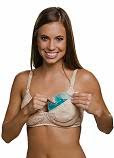
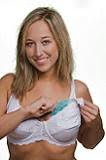
Admit it. Most nursing bras are kind of industrial-looking. At least that is what I thought when I was shopping around for a nursing bra. I also found that while breastfeeding is natural and wonderful, it is also difficult and complex and sometimes it really hurts! The best advice I could find was to use warm compresses before nursing and cold compresses afterwards. But nobody could give me any tips for how to make the whole compress thing practical or COMFORTABLE! So, my design was patented and Nizo Wear was born. I firgured while I was at it I should make them pretty as well. Nizo Wear makes nursing bras that are de both functional and pretty. Lace and rhinestones, playful prints, shapely lines, all designed to help you feel stylish and good again.

Monday, November 7, 2011

Formula ads found to impact moms' feeding decisions


Formula ads found to impact moms' feeding decisions

I recently read this article about how much formula ads impacted mom's feeding decisions and was quite shocked with the statistics! According to the World Health Organization (WHO)those who remembered a formula advertisement were two times more likely to formula feed over breastfeed. In addition, those advised by their doctor were four times more likely to feed formula rather than breastfeed. And if they started off breastfeeding, they were 6.4 times more likely to stop after seeing the ads or speaking with a doctor.

These statistics are so alarming because of the dangers formula feeding can pose in developing countries. The water used to mix with the formula can be contaminated, leading to serious health complications. Moms often use less formula than recommended to extend their supplies, resulting in malnutrition of their babies.

Now, I do not live in a developing country, but I do know that when I visited my doctor (towards the end of my third trimester) I received two coolers with formula names printed on them and two full size formula containers. I am pretty sure this is probably something that happened to many women and I can see how that is quite influential. Luckily, I was able to breastfeed and ended up donating what I received, but I can see how receiving the free stuff would easily persuade!

What was your experience?

Thank you oncloudmom for sharing this article!


view the full article here: http://blog.oncloudmom.com/2011/11/formula-ads-found-to-impact-moms.html

Friday, October 28, 2011

Breast Cancer Prevention: How to reduce your risk


Since October is Breast Cancer Awareness month we decided to share some tips on how to reduce your breast cancer risk. (yes, breastfeeding is one of the four tips recommended!) I was shocked when I read one person will die of breast cancer every 13 minutes in the United States. But what is striking about this particular disease is that we have the ability to monitor for it in ways we don't necessarily with other types of cancer. Share this info and help save a life!

Get regular check-ups and do self-exams to make sure you're staying healthy! If you catch breast cancer early enough, the survival rates are very high.

(The following habits are provided by Mayo Clinic) Breast cancer prevention starts with healthy habits — such as limiting the amount of alcohol you drink and staying physically active. Understand what you can do to prevent breast cancer.
If you're concerned about breast cancer, you may be wondering if there are steps you can take toward breast cancer prevention. Understand the lifestyle factors that may affect your risk of breast cancer and what you can do to stay healthy.

What can I do to reduce my risk of breast cancer?
Breast cancer prevention begins with various factors you can control. For example:

Limit alcohol. The more alcohol you drink, the greater your risk of developing breast cancer. If you choose to drink alcohol — including beer, wine or liquor — limit yourself to no more than one drink a day.

Control your weight. Being overweight or obese increases the risk of breast cancer. This is especially true if obesity occurs later in life, particularly after menopause.

Get plenty of physical activity. Being physically active can help you maintain a healthy weight, which, in turn, helps prevent breast cancer. For most healthy adults, the Department of Health and Human Services recommends at least 150 minutes a week of moderate aerobic activity (think brisk walking or swimming) or 75 minutes of vigorous aerobic activity (such as running), in addition to strength training exercises at least twice a week. If you're just starting a physical activity program, start slowly and build intensity gradually.

Breast-feed. Breast-feeding may also play a role in breast cancer prevention. The longer you breast-feed, the greater the protective effect

Discontinue hormone therapy. Long-term combination hormone therapy increases the risk of breast cancer. If you're taking hormone therapy for menopausal symptoms, ask your doctor about other options. You may be able to manage your symptoms with non-hormonal therapies, such as physical activity. If you decide that the benefits of short-term hormone therapy outweigh the risks, consider using the lowest dose that's effective for your symptoms, and plan to use it only temporarily.

Can a healthy diet prevent breast cancer?
Research shows that eating a diet rich in fruits and vegetables doesn't offer direct protection from breast cancer. In addition, a recent study of dietary fat and breast cancer showed only a slight decrease in the risk of invasive breast cancer for women who ate a low-fat diet. However, eating a healthy diet may decrease your risk of other diseases, such as diabetes, cardiovascular disease and stroke. A healthy diet can also help you maintain a healthy weight — a key factor in breast cancer prevention.

Thursday, October 20, 2011

Shocking breastfeeding interview


Interview with model and author Tara Moss on breastfeeding:

Hello! I came across this lovely interview with model and author Tara Moss who lives in Australia. What caught my eye, and shocked me, was learning that Australia’s breastfeeding rate is only 14% at 6months!

Tara was clearly as shocked as I am because she has teamed up with Unicef to help raise those rates. This is a great article that talks about our cultures ambivalence towards breastfeeding, especially in public. This is supported by the fact that we feel we have to create cover-ups and new laws to make it ok for a woman to breastfeed in public.

They also touch on the subject that society has no problem seeing breasts in an ad to sell a product. But when a mother breastfeeds her baby in public there is an uproar. Which, I thought raised a really great point that I do not often think about.

I would love to hear your thoughts on the interview.

Peace,
Nicole

http://blogs.abc.net.au/nsw/2011/10/tara-moss-advocate-for-breastfeeding.html#

Wednesday, October 5, 2011

Resources for family friendly activities in Madison WI

photo from Madisonloveskids.com

Hello! I was just introduced to a new website that lists hundreds of resources for families who either live in Madison, Wisconsin or who will be visiting. This is a great one-stop website for either Wisconsinites looking for something to do or for those of you planning a trip to Wisconsin and are not sure what to do with your children.

MadisonMamas.com includes resources for pregnancy, groups, classes, activities, fitness, services, dining and shopping. They also showcase local events, specials, books, project ideas, recipes, décor, new products and much more. Each listing has a short description and link to the business's website.

Another amazing website I love that lists many local events is Madisonloveskids.com . This website has wonderful up-to-date information and best of all, witty writings! Check it out!!

Have any other sites we should all know about? Share them with us....

Nicole

Tuesday, August 2, 2011

What makes Nizo Wear Nursing Bras different?


Nizo Wear nursing bras are different from all other nursing bras on the market because they add a discreet patented pocket to the pull down flap.
This pocket allows new mothers to place a heating and cooling pack comfortably to their
breast to aid in milk let down and for pain relief after nursing or associated
with plugged ducts and mastitis.

The pocket acts as a thin barrier between wearer’s skin and the heating and cooling pack, which increases wearer’s comfort and safety. This innovative design is offered in amazingly soft fabrics that boast flirty designs.

Not only are our bras functionally fabulous, but they are pretty! Admit it. Most nursing bras you are kind of industrial-looking. Nizo Wear nursing bras are designed to be both functional and pretty. Lace and rhinestones, playful prints, shapely lines, all designed to help you feel stylish and good again. And we know you just want to FEEL GOOD AGAIN!

Check out our products on www.nizowear.com ps. dont forget about our 30% off coupon on web orders with code: worldbfweek

The inspiration behind Nizo Wear Nursing Bras and why we love world breastfeeding week's theme!

Want to know what inspired our unique patented nursing bras? I am sure it sounds like many of your stories. We'd love to hear yours! Here is mine: (ps. dont forget about our 30% off coupon on web orders with code: worldbfweek)

I am a mom who almost gave up nursing within the first week. Best piece of advice I wish I had? Find an experienced lactation consultant, doula or midwife before you give birth that will come to you when you need her! Most moms have that time of need and it is the make or break point of continued breastfeeding.

But I thought hey, since I took the breastfeeding class the hospital offered when I was pregnant and then after I gave birth I talked to the lactation consultants multiple times at the hospital, I should be good! Breastfeeding is simple, right? Well, I could never have been more wrong. But that was my first lesson on this journey of motherhood. I am continuously reminded that I cannot learn it all from a book or a single class!

Looking back, I realized that I really had no idea what to expect no matter how many people told me what it is "suppose" to be like. All the lactation consultant at the busy hospital asked me was "does it feel normal?" And I thought to myself, "Normal!??? How am I suppose to know if THIS feels normal??!!"

Sure, my beautiful baby looked like he was latched on correctly from the outside. Little did I know that his tongue was hitting the tip of my nipple with each suck, which over the course of the next week caused me excruciating pain and my nipples to crack and bleed.

Unfortunately, I did not have an immediate resource outside of my hospital. I tried calling the lactation consultant at the hospital but had to leave messages. When they did get back to me all they could tell me was to put ice packs on and to leave some of my milk on my nipples after each feeding. Well, the cool packs helped to ease the pain a bit after wards, but the root of my problem was not solved!

After a week of agony, my sleep deprived mommy brain clicked and I made a desperate call to a county health nurse I had previously worked with at my job. Thank goodness I remembered her in my state of crisis as she rushed to my rescue. She took one look at my nipples and told me the problem! Yeah, one look and she figured out how he was sucking incorrectly!

She showed me how to train my baby to get him to quit using his tongue and gave me a nipple shield to use until I was healed. It worked! The personal touch of a one on one consultation with someone who knows what they are doing is priceless! She was so amazingly wonderful and her kindness is the only reason I was able to nurse my son for 15 months! This is why I love this week's world breastfeeding theme: This year’s theme established by the World Alliance for Breastfeeding Advocacy (WABA) is: “Talk to Me: Breastfeeding, a 3-D Experience.” Their focus is on the importance of connection between mother and baby (2-dimensions) but also the third dimension of support from the health care provider, friend, family member, or citizen.
I have now made it my goal to help educate other women about breastfeeding through my patented nursing bra that features a built in healing pocket to hold a hot/cold pack and through my blog. Yes, breastfeeding can hurt but there are things you can do to help you get the relief you so desperately need to continue breastfeeding.

Nicole Zoellner
President
Nizo Wear Nursing Bras
www.nizowear.com
twitter@nizowear
facebook/nizowear

Friday, July 29, 2011

World Breastfeeding Week


In honor of World Breastfeeding Week, Nizo Wear is offering 30% off any nursing bra purchased from their website http://www.nizowear.com/! Simply pick out what Nizo Wear nursing bra you cannot live without and enter coupon code: worldbfweek. You must hurry because this sale is only valid from Sunday July 31st thru Sunday August 7th!


What is World Breastfeeding Week??
World Breastfeeding Week is celebrated every year from 1 to 7 August in more than 120 countries to encourage breastfeeding and improve the health of babies around the world. It commemorates the Innocenti Declaration made by WHO and UNICEF policy-makers in August 1990 to protect, promote and support breastfeeding.


This year’s theme established by the World Alliance for Breastfeeding Advocacy (WABA) is: “Talk to Me: Breastfeeding, a 3-D Experience.” Their focus is on the importance of connection between mother and baby (2-dimensions) but also the third dimension of support from the health care provider, friend, family member, or citizen. I LOVE this theme. Support is such an important aspect of breastfeeding, as those of you who know my story know that I could not have continued to breastfeed without it!

Breastfeeding is the best way to provide newborns with the nutrients they need. WHO recommends exclusive breastfeeding until a baby is six months old, and continued breastfeeding with the addition of nutritious complementary foods for up to two years or beyond.


The challenge

Malnutrition is responsible, directly or indirectly for about one third of deaths among children under five. Well above two thirds of these deaths, often associated with inappropriate feeding practices, occur during the first year of life.

Nutrition and nurturing during the first years of life are both crucial for life-long health and well-being. In infancy, no gift is more precious than breastfeeding; yet barely one in three infants is exclusively breastfed during the first six months of life.

The response
The World Health Organization recommends that infants start breastfeeding within one hour of life, are exclusively breastfed for six months, with timely introduction of adequate, safe and properly fed complementary foods while continuing breastfeeding for up to two years of age or beyond.

Promoting sound feeding practices is one of the main programme areas that the Department of Nutrition for Health and Development focuses on. Activities include the production of sound, evidence-based technical information, development of guidelines and counselling courses, provision of guidance for the protection, promotion and support of infant and young child feeding at policy, health service and community levels, production of appropriate indicators and maintenance of a Global Data Bank on Infant and Young Child Feeding.